

From Algae to the Brain: Why the 2026 Nobel Prize Puts Light in the Spotlight
An unexpected discovery in a tiny green alga has transformed neuroscience. Today, growing scientific interest in light is opening new conversations about the brain, sensory stimulation and wellbeing.
A Nobel Prize Illuminates Neuroscience
What could a microscopic green alga possibly teach us about the human brain?
More than anyone might have imagined.
The 2026 Nobel Prize in Physiology or Medicine, awarded to Karl Deisseroth, Peter Hegemann and Georg Nagel, celebrates a discovery that changed how scientists investigate the brain: the ability to control specific nerve cells using light.
Their pioneering work helped establish optogenetics, a technology that allows researchers to investigate how neural circuits contribute to memory, emotions, movement and behaviour.
Beyond this achievement, the Nobel also brings attention to a broader area of scientific interest: the many ways light can interact with living systems, particularly the nervous system.
An Unexpected Discovery: From Green Algae to Neurons
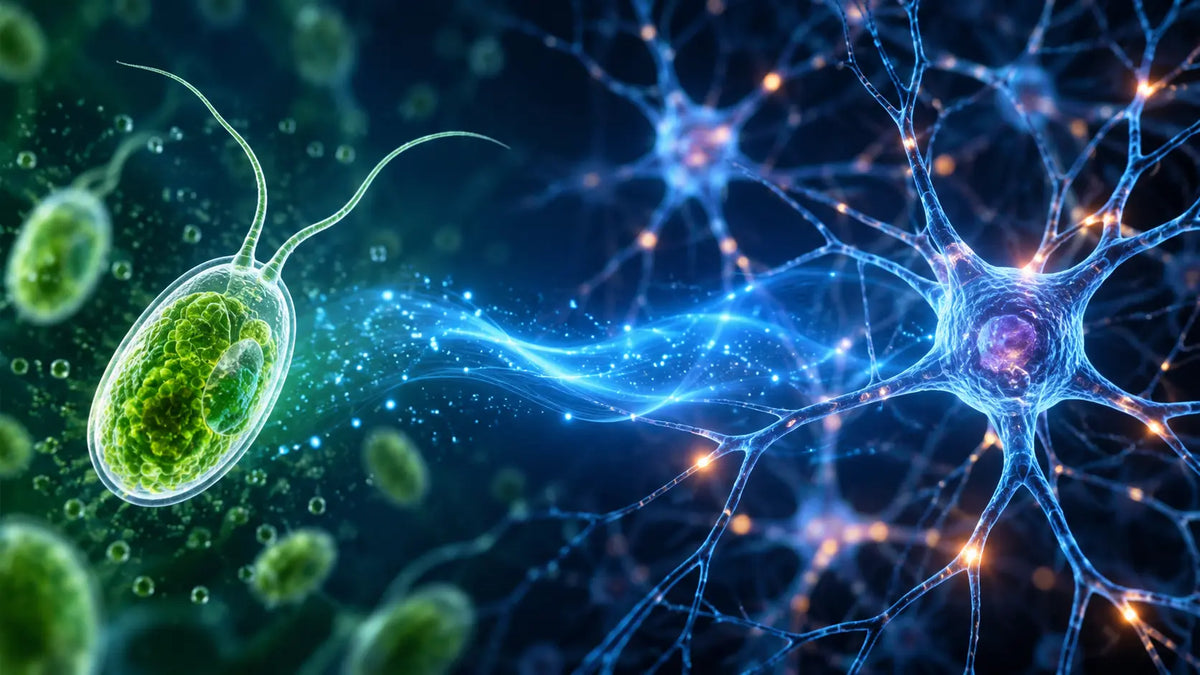
The story begins with Chlamydomonas reinhardtii, a single-celled green alga capable of swimming toward light.
While investigating how this organism detects illumination, Hegemann, Nagel and their colleagues helped identify and characterize proteins called channelrhodopsins.
These proteins act as light-sensitive switches. When exposed to particular wavelengths, they open channels in the cell membrane, allowing electrically charged particles to pass through and change the cell's electrical state.
The discovery raised an intriguing question: could these proteins also make nerve cells responsive to light?
In 2005, Deisseroth and his colleagues demonstrated that mammalian neurons genetically engineered to express channelrhodopsin could be activated using precisely timed pulses of blue light.
The implications for neuroscience were considerable.
Scientists could now selectively stimulate defined populations of neurons and investigate their roles in brain function with millisecond precision.
Light had become a new experimental tool for studying the brain.
Different Ways Light Interacts With Biology
The Nobel-winning discovery is fascinating, but it also raises an important question: does all light-based neuroscience work in the same way?
The answer is no.
Optogenetics relies on genetic modification. Researchers introduce light-sensitive proteins into selected cells, enabling light to directly control their electrical activity.
Photobiomodulation follows a different principle. It investigates how particular wavelengths interact with naturally occurring light-absorbing molecules in biological tissues, potentially influencing cellular processes.
Visual and rhythmic sensory stimulation take another route. Light enters through the eyes, where the retina converts it into electrical signals that travel through the brain's natural visual pathways.
When light is presented in rhythmic patterns, the nervous system can produce corresponding patterns of activity.
These approaches involve different mechanisms and should not be confused. Yet they illustrate a shared scientific theme: light offers multiple ways to investigate and influence biological processes.
Exploring the Brain's Natural Rhythms
One particularly interesting area of neuroscience concerns the relationship between rhythmic sensory input and the brain's electrical activity.
Our brains continuously generate patterns of neural activity, often described as brain oscillations. These rhythms are involved in sensory processing, attention, memory and sleep.
Researchers have found that repeated visual and auditory stimulation can evoke measurable rhythmic responses in the brain.
This field is often discussed in relation to neural entrainment, although researchers distinguish between stimulus-driven responses and changes to the brain's ongoing internal rhythms.
A study published in Nature Communications in 2024 demonstrated that rhythmic audiovisual stimulation could modulate activity across widespread brain networks in human participants, including regions beyond the primary sensory areas.
These findings are promising, but important questions remain. A measurable change in neural activity does not necessarily translate into a particular psychological or therapeutic benefit.
Understanding how stimulation patterns relate to meaningful outcomes remains an active area of scientific investigation.

Where NeuroVIZR Enters the Conversation
At NeuroVIZR, we explore another dimension of this relationship between light and the nervous system.
Our technology combines flickering light and sound to create immersive, non-invasive sensory experiences, using the body's natural visual and auditory pathways.
Unlike optogenetics, NeuroVIZR does not genetically modify neurons or directly switch individual brain cells on and off.
Instead, it explores how carefully designed patterns of sensory stimulation can interact with the brain's natural processing of light, sound and rhythm.
This places NeuroVIZR within a broader scientific conversation about sensory stimulation, neural dynamics and subjective experience.
While the Nobel Prize does not validate any particular consumer wellness technology, it highlights the scientific importance of understanding how light interacts with neural activity.
For NeuroVIZR, that scientific curiosity resonates with our ongoing interest in how light and sound can be used to create experiences oriented toward relaxation, attention and wellbeing.
A New Chapter in Our Understanding of Light
From a microscopic alga responding to sunlight to experiments exploring the human brain, the history of optogenetics shows how an unexpected discovery can change the direction of scientific research.
Today, light is being investigated from multiple perspectives: as a molecular switch, a tool for studying neural circuits, a potential therapeutic approach and a form of sensory stimulation capable of producing measurable brain responses.
Each field follows its own scientific path, with its own evidence and limitations.
Together, they are helping researchers better understand the relationship between light and the nervous system.
Light is far more than something we see. It is also a way to explore how living systems work.
The 2026 Nobel Prize recognizes one important achievement in that research, while other approaches continue to investigate different aspects of how light influences the brain.
Scientific sources
The scientific discoveries discussed in this article highlight different ways light can interact with the nervous system. None of these sources tested NeuroVIZR itself, and optogenetics should not be confused with non-invasive sensory stimulation.
-
The Nobel Prize in Physiology or Medicine (2026), “For their discoveries concerning light-gated ion channels and optogenetics.” Awarded to Karl Deisseroth, Peter Hegemann and Georg Nagel, the prize recognizes discoveries that transformed neuroscience by enabling researchers to control genetically targeted neurons using light.
Read the official Nobel Prize announcement -
Boyden et al. (2005), “Millisecond-timescale, genetically targeted optical control of neural activity.” This landmark study demonstrated that mammalian neurons genetically engineered to express channelrhodopsin could be activated using precisely timed pulses of blue light, establishing a foundational method for optogenetics.
Read the paper in Nature Neuroscience -
Blanpain et al. (2024), “Multisensory flicker modulates widespread brain networks and reduces interictal epileptiform discharges.” Using intracranial recordings in human participants, this study demonstrated that rhythmic audiovisual stimulation could modulate neural activity across widespread brain networks, providing relevant scientific context for research into non-invasive sensory stimulation.
Read the paper in Nature Communications
Inside NeuroVIZR