

Oltre l’Innalzamento Ritmico
Il Movimento del Potenziale Umano, la Codifica Predittiva del Cervello e la Nascita di NeuroVIZR
Qual è la Storia dell’Origine della Creazione di NeuroVIZR?
Risalendo ai nostri antenati primitivi che vivevano nelle caverne, la luce tremolante del fuoco e i suoni che rimbalzavano sulle pareti di pietra calmavano e ipnotizzavano le nostre menti. Col tempo, la scienza yogica sviluppò tecniche di meditazione concentrate che riuscirono ad espandere e risvegliare portali ancora più profondi nella nostra mente. E ora, abbiamo tecnologie in rapido progresso abbinate alle neuroscienze che possono portarci ancora più lontano con benefici ed esperienze promettenti. Le origini del Coinvolgimento Cerebrale NeuroVIZR risalgono agli inizi del nostro cervello umano e seguono un filo ininterrotto di scoperta.
La creazione effettiva del NeuroVIZR risale al 1969 e a un momento significativo per il suo inventore, che all’epoca era un giovane studente universitario. Per apprezzare l’evento, dobbiamo prima inquadrare il contesto. Gli anni ’60 e ’70 furono testimoni di una serie di potenti cambiamenti sociali che spinsero i limiti del significato e dello scopo personale. Dopo le proteste per la libertà di parola, la desegregazione, i diritti delle donne, le sostanze psichedeliche e gli hippy, arrivò il dinamico Movimento del Potenziale Umano. Il messaggio fondamentale si basava sulla convinzione che gli esseri umani possiedono vaste capacità, in gran parte inesplorate, di crescita, creatività, benessere e autorealizzazione.
Le tradizioni spirituali asiatiche—particolarmente il Buddhismo, l’Induismo e il Taoismo—furono integrate nel Movimento del Potenziale Umano attraverso l’adozione di pratiche di meditazione, consapevolezza, respirazione e consapevolezza non-duale, riformulate in termini laici ed esperienziali. Queste tradizioni fornivano metodi pratici per l’esplorazione della coscienza e l’autoregolazione, mentre le loro radici filosofiche venivano tradotte nel linguaggio psicologico occidentale focalizzato sulla crescita, la presenza e l’autorealizzazione.
Così, in questo contesto di cambiamento, immaginate un concerto rock universitario del 1969. Un proiettore era puntato sul palco e onde di luce colorata avvolgevano la band. Improvvisamente, una luce stroboscopica attraversò i musicisti. Per quanto belle fossero state le onde di colore proiettate, la luce stroboscopica lampeggiante innescò un cambiamento mentale istantaneo impossibile da ignorare. Fu lì e allora che il seme del NeuroVIZR fu piantato.
Nel giro di poche settimane, l’inventore aveva una valigia piena di luci stroboscopiche, dispositivi a luce nera e persino vecchi dispositivi Violet Ray che producevano correnti elettriche ad alta frequenza. Verso la metà e la fine degli anni ’70, kit di elettronica fai-da-te e dispositivi stroboscopici sperimentali iniziarono a circolare nelle comunità controculturali e di biofeedback, in linea con la fase finale del Movimento del Potenziale Umano. All’inizio degli anni ’80, arrivarono sul mercato le prime vere “Macchine Mentali” per consumatori: dispositivi portatili controllati da microprocessore che combinavano occhiali LED (lampeggio a occhi chiusi) con toni audio. Questo segnò il passaggio dalla pratica sperimentale ai prodotti commerciali.
I primi approcci con la luce lampeggiante delle “Macchine Mentali” si basavano sulla Risposta di Frequenza Seguita (FFR)—l’assunzione che il cervello si sincronizzasse passivamente a un ritmo esterno ripetuto. Le neuroscienze contemporanee e la neuroplasticità hanno riformulato questa visione: ora il cervello è considerato un sistema attivo, predittivo e adattivo, non un metronomo.
Di conseguenza, la luce lampeggiante non è più vista solo come un mezzo per guidare la sincronizzazione, ma come uno stimolo dinamico che coinvolge attenzione, aspettativa, emozione e variabilità, creando condizioni che invitano a una riorganizzazione adattiva piuttosto che imporre uno stato fisso. Questo cambiamento definisce il coinvolgimento neuroplastico del cervello—dove il cambiamento emerge dall’interazione, non dall’imposizione. Questa è l’evoluzione che ci ha portato all’esperienza di Coinvolgimento Cerebrale NeuroVIZR.
Qual è la Differenza tra Coinvolgimento Cerebrale e Innalzamento Ritmico?
L’Innalzamento Ritmico Cerebrale e ciò che spesso viene chiamato Coinvolgimento Cerebrale rappresentano due modelli concettuali diversi di come il cervello può rispondere a stimoli ritmici, specialmente se interpretati attraverso il quadro della Codifica Predittiva del Cervello.
Innalzamento Ritmico Cerebrale
L’innalzamento ritmico si basa sull’assunzione che l’attività neurale possa sincronizzarsi a un ritmo esterno (luce o suono), un fenomeno spesso associato alla Risposta di Frequenza Seguita (FFR). La ripetizione viene usata per guidare le oscillazioni neurali verso una frequenza target. Questo modello considera il cervello come un sistema la cui attività può essere influenzata—almeno temporaneamente—da un input ritmico costante.
Caratteristiche principali
- Tendenza alla sincronizzazione con il ritmo esterno
- Frequenze fisse o con variazioni limitate
- Spesso presuppone risposte relativamente simili tra gli utenti
- Adattabilità o personalizzazione limitata
Coinvolgimento Cerebrale (modello descrittivo allineato alla Codifica Predittiva)
Il Coinvolgimento Cerebrale, come termine usato in alcuni contesti contemporanei, descrive un approccio che vede il cervello come un sistema predittivo e auto-organizzante che genera continuamente modelli interni del mondo e li aggiorna attraverso l’errore di previsione (“sorpresa”). Piuttosto che mirare principalmente alla sincronizzazione, la stimolazione è strutturata per interagire con aspettative, rilevanza emotiva e variabilità neurale—incoraggiando la partecipazione attiva delle reti percettive, attentive e affettive.
Caratteristiche principali
- Enfasi sull’interazione piuttosto che sulla semplice sincronizzazione
- Variabilità strutturata e transizioni di fase
- Coinvolgimento di attenzione, emozione e significato contestuale
- Intenzione di supportare l’aggiornamento adattivo dei modelli neurali (processi neuroplastici)
Ruolo della Codifica Predittiva del Cervello
La Codifica Predittiva del Cervello propone che il cervello:
- Preveda l’input sensoriale in arrivo
- Confronti le previsioni con l’input reale
- Aggiorni i modelli interni per ridurre l’errore di previsione
In questo quadro, un design orientato al coinvolgimento introdurrebbe novità informative, spostamenti temporali e incertezza modellata. Questi generano errori di previsione gestibili che richiedono una risoluzione. Il processo di aggiornamento adattivo associato alla risoluzione di tali errori è ampiamente collegato nelle neuroscienze all’apprendimento e alla plasticità.
Il cambiamento neuroplastico, secondo le neuroscienze contemporanee, non è guidato solo dalla ripetizione, ma da un’interazione saliente, contestualmente significativa e temporalmente strutturata con i sistemi predittivi del cervello.
Qual è la Tua Motivazione e Visione nella Creazione di NeuroVIZR?
Come fondatore e inventore del dispositivo e dell’esperienza di Coinvolgimento Cerebrale NeuroVIZR, conoscere la mia motivazione personale e la mia prospettiva potrebbe essere illuminante. Sebbene esistano molti termini e concetti per descriverla, la mia visione fondamentale della Vita è “spirituale”. Credo nella continuità, nella multidimensionalità e nell’interdimensionalità. Come molte altre persone spirituali e, curiosamente, molti fisici quantistici, credo che la Coscienza sia primaria e che tutti gli altri aspetti della Vita, inclusa la “materia”, siano un’espressione della Coscienza. Non credo in “interno/esterno” e altre forme di apparente separazione. Suppongo che potrei essere considerato un “non-dualista” nelle mie vedute.
Non vedo nemmeno una differenza significativa tra “tecniche” e “tecnologia”. Entrambe mi appaiono come mezzi intelligenti e abili per raggiungere un risultato desiderato. Un canto vocale (tecnica) può integrarsi fluidamente con il battito di un tamburo a mano (tecnologia).
Gli approcci per esplorare ed espandere la Coscienza, per me, rientrano in un’unica grande categoria – la categoria degli “agenti psicoattivi”. Quindi, un “agente psicoattivo” è qualsiasi tecnica o tecnologia che stimola il cervello a cambiare stato, sia da ordinario a ordinario sia da ordinario a straordinario. Di conseguenza, per essere chiari ed evitare fraintendimenti, tutti i composti psichedelici sono “agenti psicoattivi”…MA… non tutti gli “agenti psicoattivi” sono composti psichedelici.
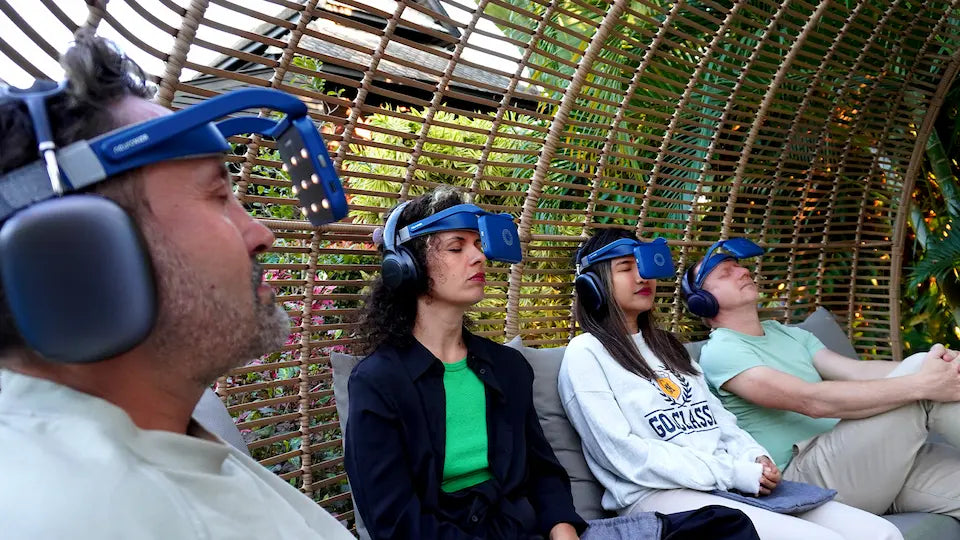
Gli “agenti psicoattivi” non composti possono includere meditazioni yogiche, respirazione, sport estremi, ritiri in stanze buie, danza estatica, digiuno prolungato, immersioni in temperature calde/fredde e così via. E sì, tecnologie a luce lampeggiante a occhi chiusi e suono pulsato come il NeuroVIZR sarebbero considerate “agenti psicoattivi”.
Tornando alle mie convinzioni, sembra ovvio che il nostro cervello umano abbia la capacità naturale di passare da funzioni molto stabili e prevedibili a condizioni molto dinamiche e flessibili. È una gamma sana di stati ed esperienze. Uno stato dinamico “non ordinario” molto comune e forse sottovalutato è quello di forte umorismo. Ridere così intensamente da farci momentaneamente “dimenticare noi stessi” non è certamente uno stato mentale banale, ma è anche universale.
Quindi, avendo assistito all’evoluzione della tecnologia personale di luce e suono in questi decenni della mia età adulta, mentre praticavo sinceramente una serie di tecniche tradizionali di meditazione, il mio tentativo di promuovere cambiamenti positivi e crescita nella Coscienza creando il NeuroVIZR appare comprensibile.
Buckminster Fuller è stato uno scienziato geniale del nostro secolo scorso. Ho avuto la straordinaria fortuna di festeggiare con lui a casa sua il suo 83° (e ultimo) compleanno. Come regalo, gli ho donato un carattere cinese in bronzo. Ricevendolo, mi ha chiesto cosa significasse. Ho detto: “Bucky, significa Lunga Vita.” Ha fatto una breve pausa, mi ha guardato e ha detto, “Lunga Vita… a cosa serve una lunga vita se non fai qualcosa di buono con essa”.
Attualmente sto godendo di una lunga vita e le parole di Bucky risuonano vere per me ogni giorno. La mia motivazione è essere un aiuto e un guaritore al meglio delle mie capacità. Qui nel mio ufficio NeuroVIZR, ho appeso il carattere cinese in bronzo di Bucky in segno di rispetto e come ispirazione.
Posso Ascoltare la Mia Musica con NeuroVIZR?
La scienza semplice del perché NeuroVIZR funziona