

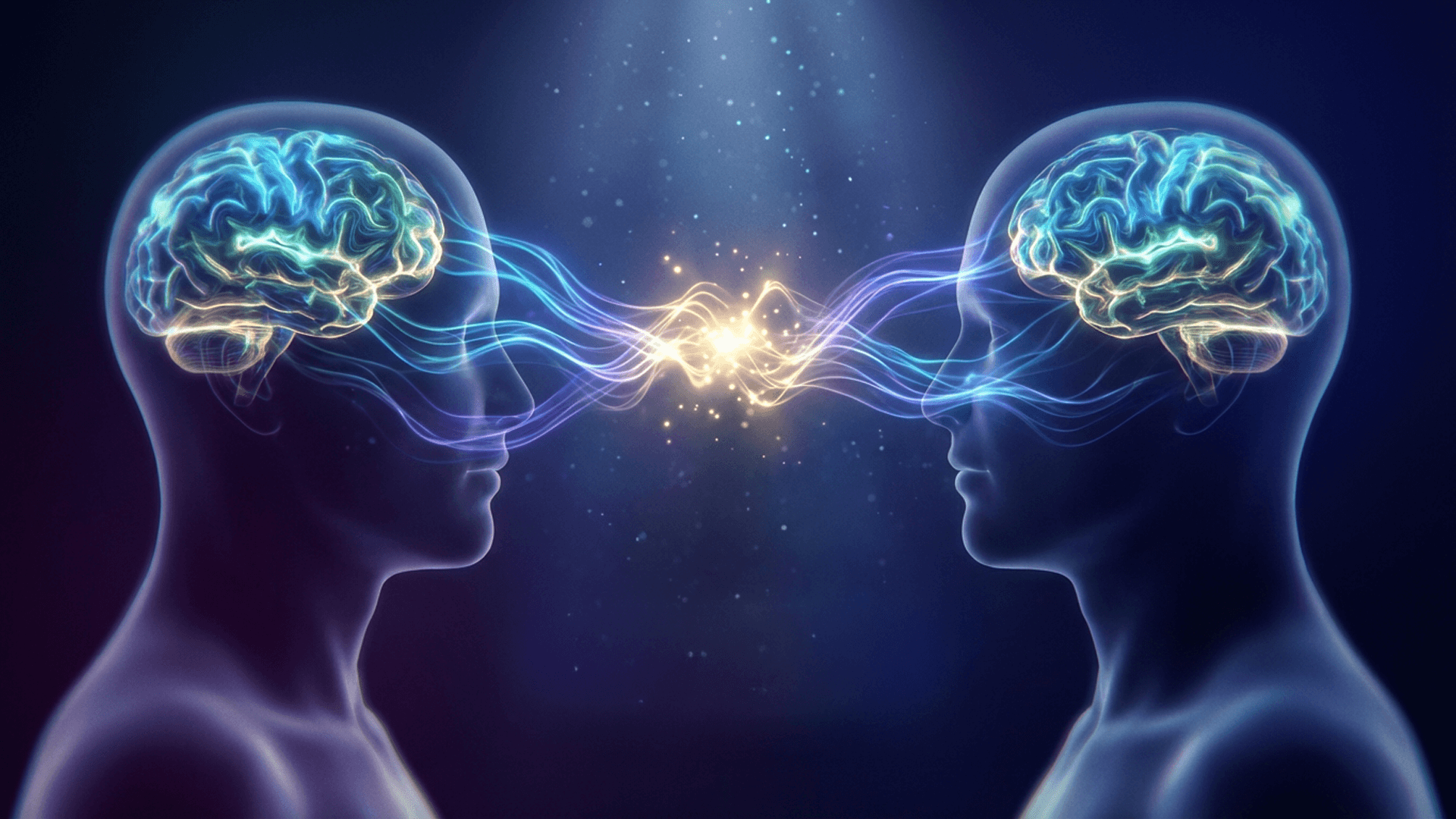
Les connexions esprit à esprit sont réelles
La connexion esprit à esprit peut sembler réelle parce que les cerveaux peuvent synchroniser leurs rythmes lors d’expériences partagées.
Le sentiment que beaucoup de gens reconnaissent
Avez-vous déjà croisé le regard de quelqu’un à travers une pièce bondée ?
À cet instant, on a l’impression de connaître déjà ses pensées.
Ou avez-vous partagé un silence avec un être cher ?
Aucun mot n’était nécessaire car le sentiment était déjà clair.
La plupart d’entre nous ont goûté à ces moments rapides et électriques.
Beaucoup se demandent ensuite s’ils les ont imaginés.
Une explication pratique basée sur le cerveau
Et si ces moments n’étaient pas seulement une question de chance ?
Et si nos cerveaux se synchronisaient discrètement sous la surface ?
Les cerveaux peuvent refléter des schémas et synchroniser leurs rythmes lors de moments partagés.
Cette synchronisation crée un pont subtil entre deux personnes.
Comment les scientifiques l’appellent
Les chercheurs parlent de synchronisation intercerveau.
Cela signifie que deux cerveaux montrent une activité plus alignée en même temps.
Ce sujet est étudié en neurosciences dans des contextes de groupe créatifs.
Un exemple courant est celui des musiciens qui improvisent ensemble.
Beaucoup décrivent ce ressenti comme « le groove ».
Cela peut être plus qu’un simple état psychologique fort.
Ce qui change pendant les expériences partagées
Quand deux (ou plusieurs) personnes vivent la même expérience simultanément, quelque chose change.
Leurs cerveaux peuvent commencer à bouger ensemble en plus grande harmonie.
Cela facilite la compréhension mutuelle sans mots.
Les pensées, sentiments et réactions peuvent s’aligner plus facilement.
Les gens décrivent souvent des bénéfices tels que :
- Une empathie et un alignement émotionnel facilités
- Une communication plus fluide avec moins d’interruptions
- Un « flow » de groupe renforcé dans le travail d’équipe et la créativité
- Un rythme partagé qui soutient le timing et la coordination
Ce qui peut aussi changer à l’intérieur de chaque personne
Alors que deux cerveaux se synchronisent davantage, chacun peut aussi se détendre.
Le verrouillage rigide et prévisible à l’intérieur du cerveau peut se relâcher.
Cette baisse de synchronisation intracérébrale ne signifie pas un désordre.
Elle peut signifier flexibilité et espace pour de nouvelles connexions.
Quand les schémas rigides s’assouplissent, la créativité peut émerger plus facilement.
De nouvelles idées peuvent apparaître, et les vieilles habitudes se desserrent.
Pourquoi cela compte dans la vie réelle
En combinant ces deux changements, quelque chose de spécial peut apparaître.
La liberté à l’intérieur de chaque esprit peut coexister avec la connexion entre esprits.
On a l’impression de s’éloigner du « je » pour s’appuyer sur le « nous ».
L’attention passe de l’auto-surveillance à un flux partagé.
Les exemples que les gens imaginent souvent incluent :
- Une équipe de design passant d’idées dispersées à une direction commune
- Deux musiciens se synchronisant rapidement, même s’ils viennent de se rencontrer
- Des couples retrouvant la chaleur sans forcer la conversation
- Des groupes s’ouvrant avec plus d’honnêteté et de facilité
- Des équipes s’alignant avant la pression, la performance ou les échéances
En résumé
La connexion esprit à esprit peut sembler réelle parce que les cerveaux peuvent se synchroniser ensemble.
En même temps, chaque cerveau peut devenir plus flexible et créatif.
Pourquoi voyons-nous des couleurs avec la lumière clignotante NeuroVIZR ?
Puis-je écouter ma propre musique avec NeuroVIZR ?