

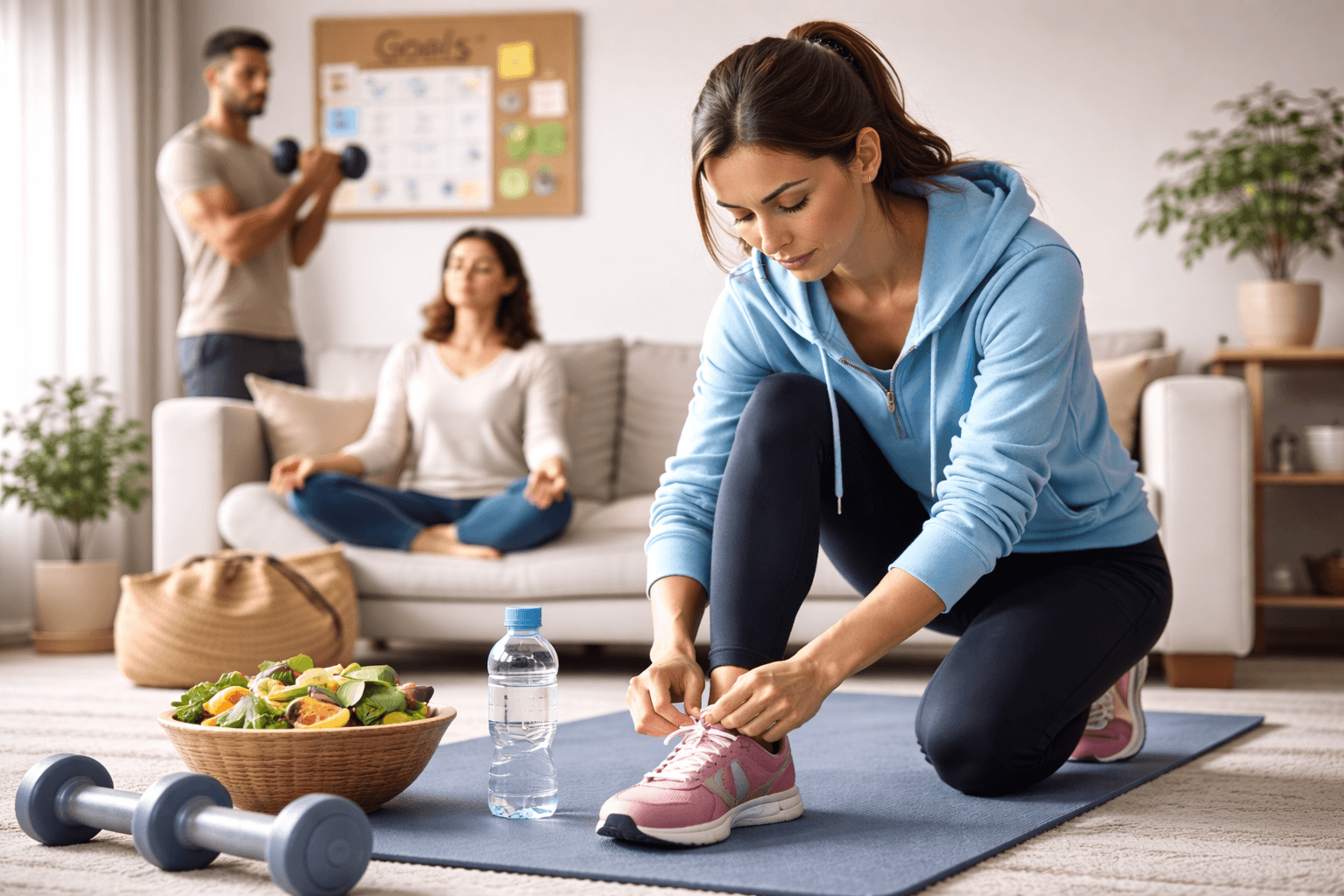
Vous avez du mal avec vos résolutions du Nouvel An ? Vous n’êtes pas seul - voici comment reprendre le bon chemin
Chaque janvier commence avec de la motivation.
Nous prenons des intentions pour nous sentir mieux, vivre plus sainement et enfin tenir les habitudes que nous avons repoussées. Pour beaucoup, cela signifie perdre du poids, aller plus régulièrement à la salle de sport, arrêter de fumer, s’engager dans le Dry January, améliorer le sommeil ou simplement se sentir plus équilibré au quotidien.
Pourtant, après les premières semaines, la réalité s’installe souvent.
Si vous avez du mal à rester constant avec vos résolutions du Nouvel An, vous ne ratez pas - c’est très courant. Le changement significatif ne vient que rarement de la pression. Il grandit grâce à la clarté, la constance et la bienveillance envers soi-même.
Voici 7 conseils réalistes pour vous aider à vous reconnecter à vos objectifs et continuer d’avancer - sans stress ni perfectionnisme.
1. Reformulez votre résolution comme une direction, pas un test
Beaucoup de résolutions échouent parce qu’elles sont traitées comme des règles strictes.
Au lieu de :
- « Je dois perdre du poids rapidement »
- « Je dois aller à la salle de sport tous les jours »
- « Je dois arrêter de fumer immédiatement »
- « Je ne peux pas boire du tout pendant le Dry January »
Essayez de reformuler :
- « Je construis des habitudes plus saines avec le temps »
- « Je deviens plus actif de manière durable »
- « Je fais attention à ce qui soutient mon corps et mon esprit »
Quand les objectifs sont flexibles et soutenants, ils sont plus faciles à maintenir.
2. Divisez les grands objectifs en petites actions quotidiennes
Les grands objectifs peuvent sembler écrasants, surtout quand la motivation fluctue.
Si votre but est de faire plus d’exercice, une action quotidienne pourrait être :
- une marche de 10 minutes
- des étirements légers le matin
- simplement se rendre à la salle de sport sans pression
Si votre objectif est la perte de poids, le changement peut commencer par la prise de conscience - pas la restriction.
Les petites actions faites régulièrement comptent souvent plus que des efforts intenses à court terme.
3. Construisez un rituel au lieu de compter sur la motivation
La motivation est imprévisible. Les rituels sont fiables.
Plutôt que de vous forcer uniquement par la volonté, reliez votre résolution à une routine quotidienne simple :
- un moment de calme avant ou après la salle de sport
- un court moment de détente au lieu de grignoter tard le soir
- une routine du soir cohérente pendant le Dry January
Les rituels réduisent la friction mentale et facilitent la répétition des habitudes.

4. Réduire la surcharge mentale avant de changer de comportement
Beaucoup de gens sous-estiment à quel point le stress mental impacte les habitudes physiques.
Quand l'esprit se sent surchargé, il devient plus difficile de :
- faire de l'exercice régulièrement
- faire des choix alimentaires réfléchis
- résister à la cigarette ou à l'alcool par habitude
Soutenir le calme mental - par le repos, la respiration ou des expériences sensorielles douces - peut rendre les comportements plus sains plus naturels plutôt que forcés.
5. Remplacez ce que vous supprimez
Supprimer une habitude sans la remplacer crée des frictions.
Si vous :
- boire moins pendant le Dry January
- fumer moins de cigarettes
- réduire les grignotages nocturnes
Remplacez l'habitude par quelque chose de soutenant :
- une tisane le soir
- une courte promenade ou étirement
- un moment apaisant de repos
Le changement durable fonctionne mieux par remplacement, pas privation.
6. Intégrez NeuroVIZR comme une réinitialisation quotidienne de soutien
Pendant les périodes de changement d'habitudes - que ce soit faire plus d'exercice, perdre du poids ou réduire le tabac ou l'alcool - beaucoup de personnes bénéficient d'un moment constant de réinitialisation mentale.
NeuroVIZR est conçu comme une expérience de bien-être non invasive par la lumière et le son qui peut s'intégrer naturellement dans les routines quotidiennes. De nombreux utilisateurs le décrivent comme :
- une façon de se détendre après les entraînements ou les journées chargées
- une transition apaisante vers la soirée
- un moment de concentration avant ou après une activité physique
Utilisé régulièrement, NeuroVIZR peut devenir un rituel d'ancrage qui soutient la clarté et la relaxation, facilitant la constance dans les objectifs de bien-être.
(NeuroVIZR est un appareil de bien-être, pas un outil médical. Les expériences individuelles peuvent varier.)
7. Concentrez-vous sur la constance, pas la perfection
Manquer une séance d'entraînement, prendre un verre ou perdre de l'élan ne détruit pas les progrès.
Ce qui compte, c'est de revenir - doucement - à votre intention.
La constance ne consiste pas à tout faire parfaitement. Il s'agit de continuer, même lorsque la vie n'est pas idéale.
Un rappel doux
Les résolutions du Nouvel An ne sont pas une question de pression ou de punition.
Il s'agit de vous soutenir - mentalement et physiquement - de manière réaliste et durable.
Si vos objectifs incluent de vous sentir plus calme, plus actif et plus équilibré, vous êtes déjà sur la bonne voie.
Vous voulez en savoir plus ?
Si vous souhaitez explorer davantage d'idées autour de la clarté mentale, de la concentration et des routines quotidiennes de soutien, ces articles du blog NeuroVIZR peuvent être utiles :
- 10 conseils pour reprogrammer votre cerveau pour une vie meilleure
- Comment utiliser NeuroVIZR pour optimiser votre sommeil et votre concentration matinale
- Les connexions esprit à esprit sont réelles
Résumé
Avoir du mal avec les résolutions du Nouvel An est plus courant qu'on ne l'admet souvent. Que votre objectif soit de faire plus d'exercice, de perdre du poids, de réduire le tabac ou l'alcool, ou simplement de vous sentir plus équilibré, un changement durable ne vient que rarement de la pression ou de la perfection. En se concentrant sur de petites étapes, des rituels de soutien, le calme mental et la constance dans le temps, il devient plus facile de rester connecté à vos intentions. Le progrès ne nécessite pas de tout faire en même temps — il commence par créer de l'espace pour des habitudes qui correspondent vraiment à votre vie quotidienne.
Pourquoi vous voyez des couleurs quand vous fermez les yeux
Comment NeuroVIZR induit une relaxation profonde (en termes simples)